

A hardness number is useful, but it answers a limited question. It describes resistance to scratching. It does not tell you whether a stone will tolerate an impact, a poorly supported edge, or pressure applied to correct an inaccurate seat.
Topaz makes that distinction especially clear. GIA lists its Mohs hardness as 8, while warning that its basal cleavage reduces its toughness. Cleavage is a direction along which the crystal can split. A clean-looking stone still requires thoughtful handling.
Identify what is on your bench
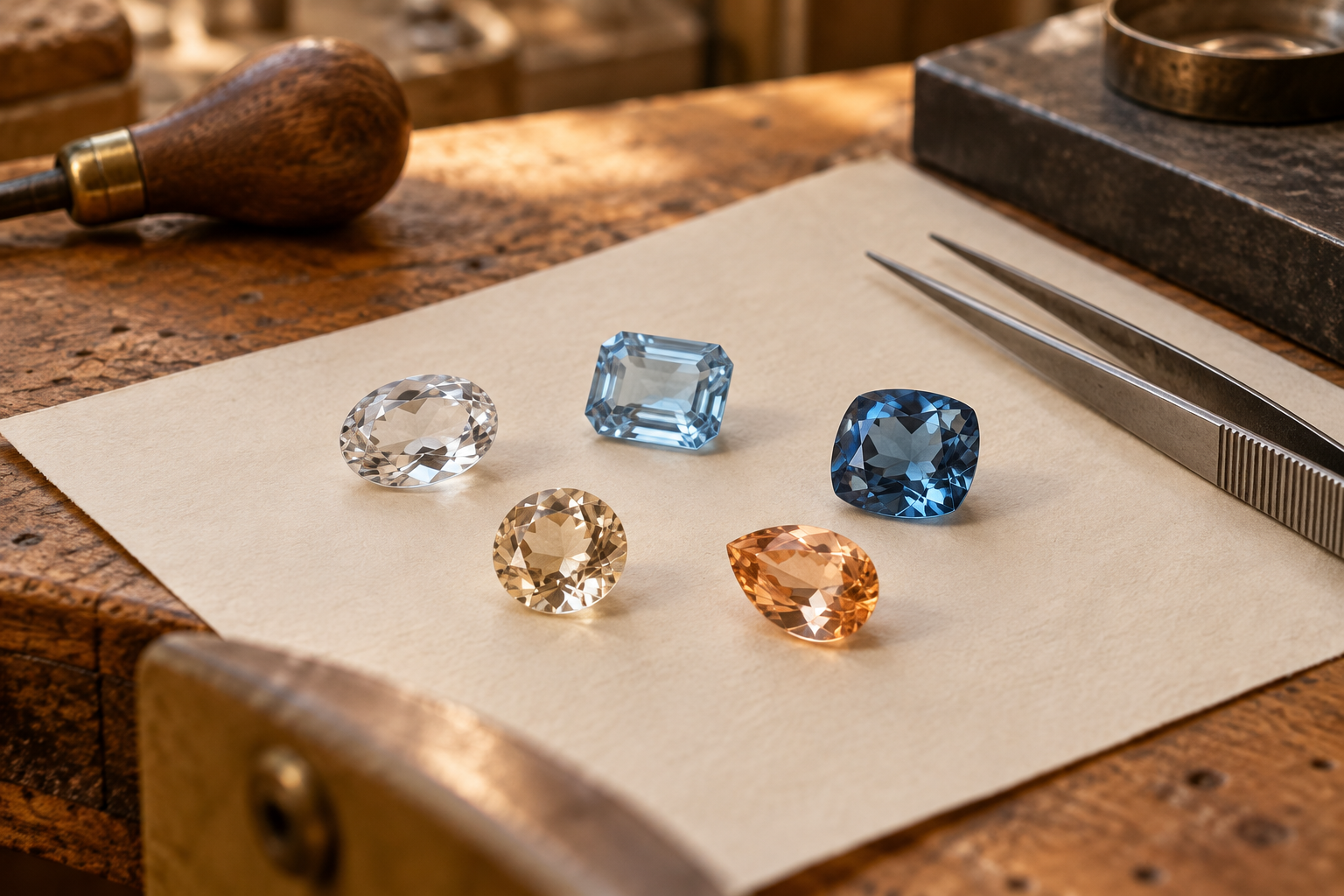
Topaz is an aluminum silicate containing fluorine and hydroxyl. It occurs in several colors, and appearance alone does not establish its treatment history. Much commercial blue topaz owes its color to treatment. Some iridescent material sold as mystic topaz has a surface coating.
Ask the supplier what the stone is, what treatments are known, and what care restrictions accompany it. Keep those answers with the job record. Do not substitute a color name for a material description, or assume that two similarly colored stones need identical handling.
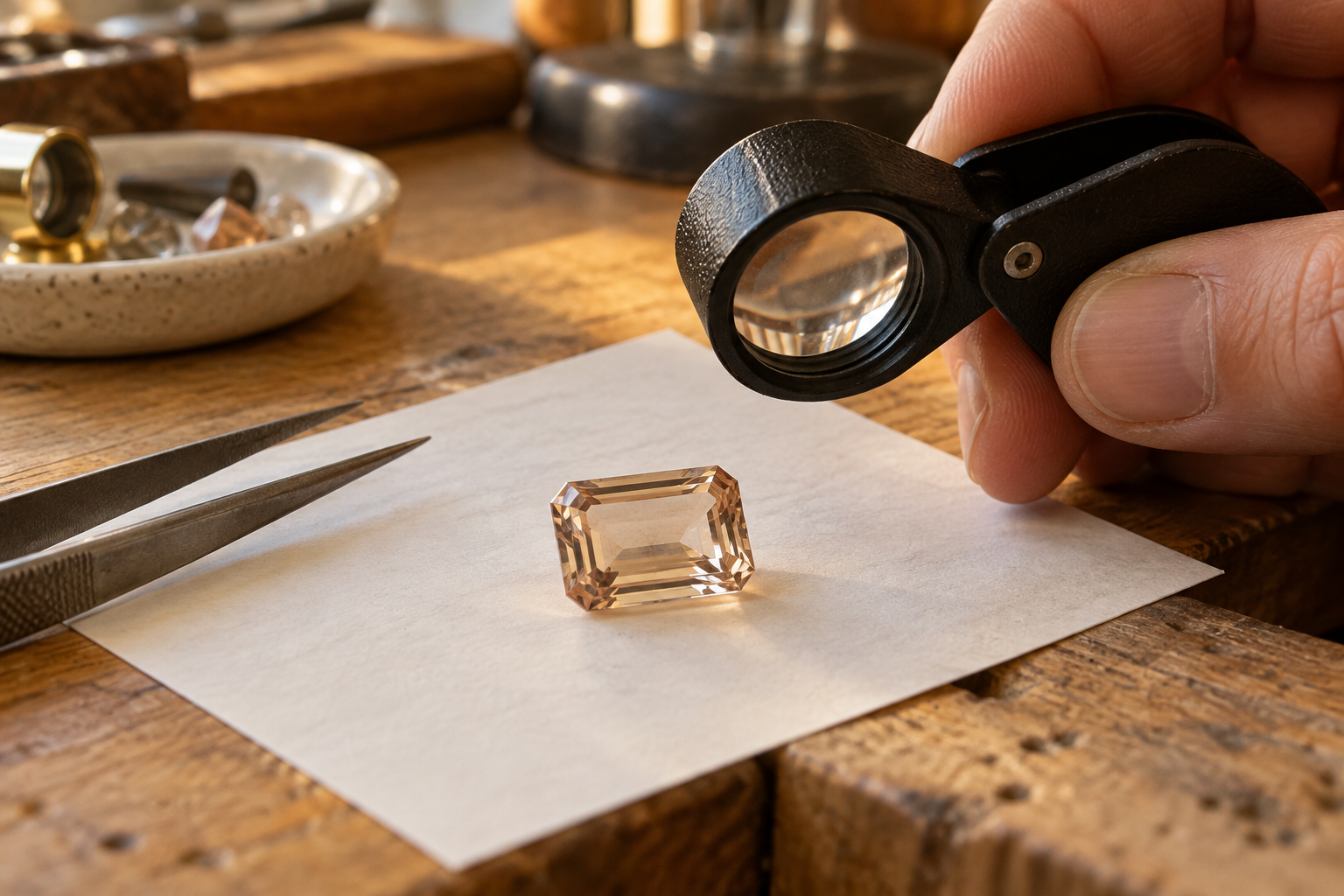
Measure the actual stone rather than designing solely around its nominal size. Record length, width, depth, girdle variation, and the space its pavilion needs. Look for existing chips or surface-reaching damage before making a setting decision.
Let fit do its job before pressure begins
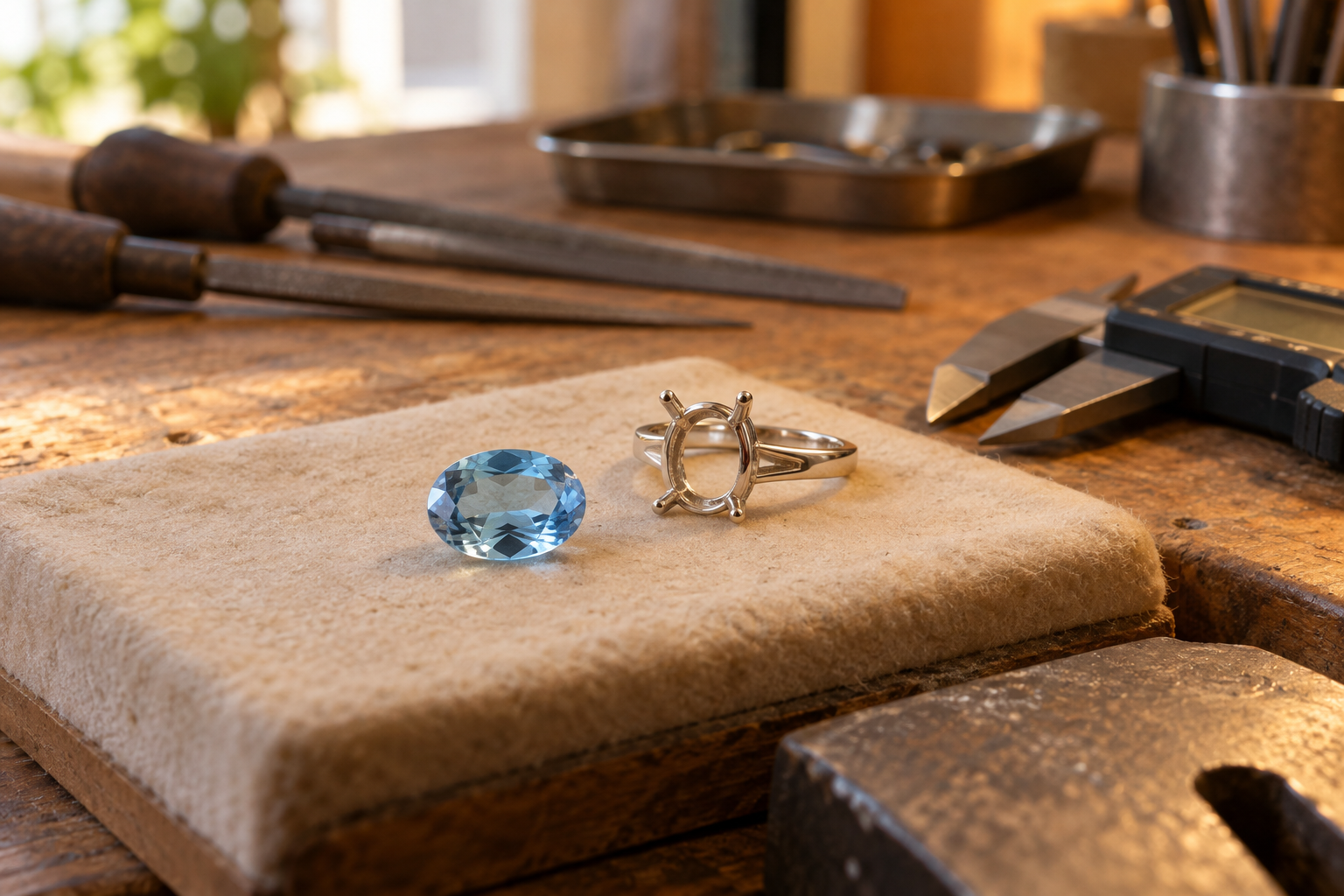
A setting should locate and support the stone before the metal is moved to retain it. If the topaz rocks, sits visibly tilted, or contacts the mounting at an unintended high point, stop and find the interference.
For example, a stone that appears level from above may be touching below the girdle on one side. Pushing a prong harder does not remove that obstruction. Inspect the seat and clearance under magnification, then correct the metal with the stone safely removed.
Plan support around the particular cut. Protect exposed corners and avoid leaving a thin edge to carry a concentrated load. Choose tools and a workholding arrangement that let you see the contact as you work. An appropriate protective mounting reduces some wear risks; it does not make topaz immune to damage.
Separate fabrication from the stone
Complete soldering and other high-temperature fabrication before setting whenever the construction permits. GIA cautions that heat and abrupt temperature changes can break topaz. Treat a repair on a mounted stone as a fresh assessment, including whether removal can be done without introducing more risk.
Surface coatings add another planning issue. Abrasive cleaning and buffing can remove a coating, so finish the metal before the coated stone enters the assembly. If a stone’s identity or treatment remains unresolved, postpone an irreversible process until you have enough information.
Finish with a usable care handoff
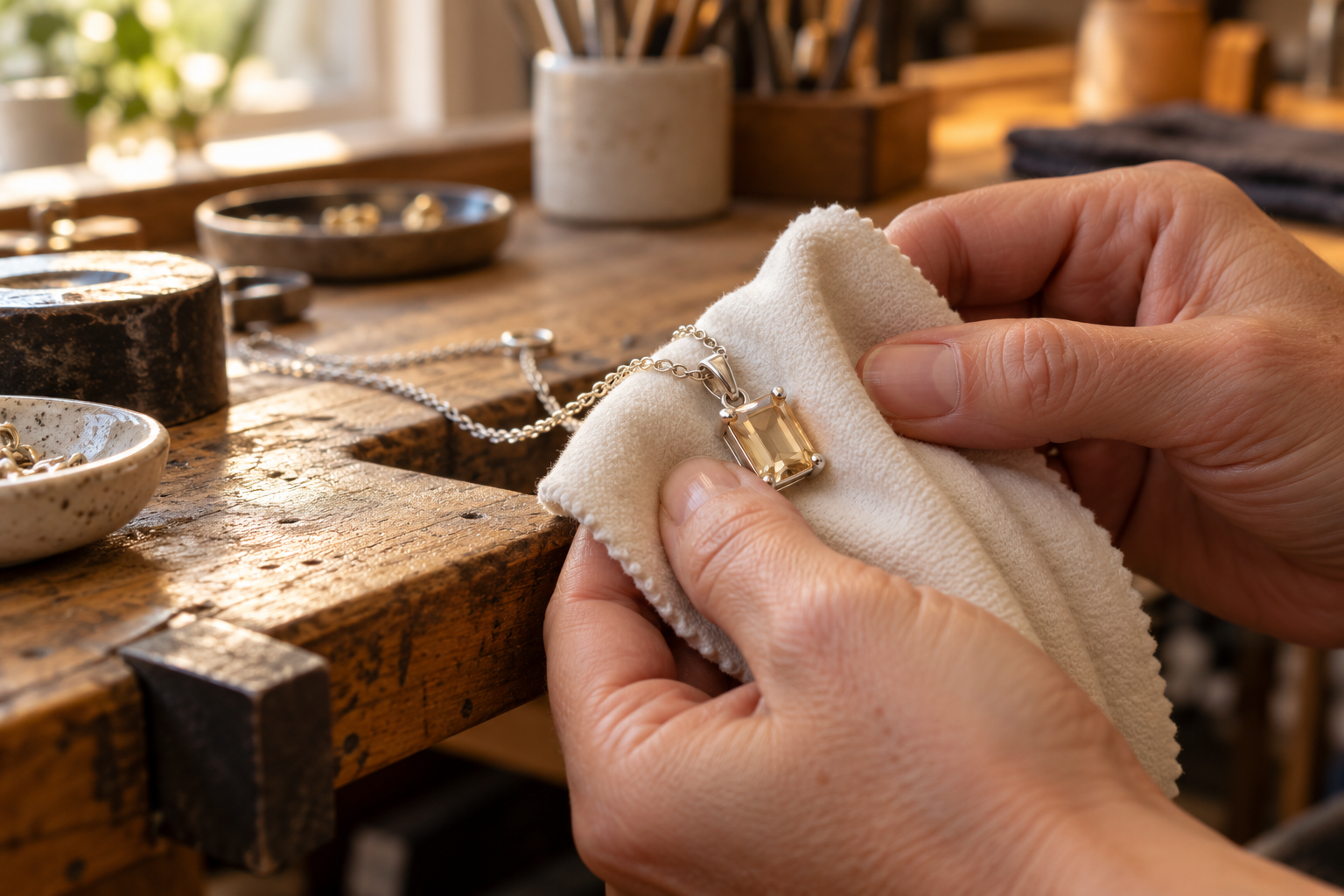
GIA recommends warm soapy water and advises against steam and ultrasonic cleaning for topaz. Give the wearer instructions suited to the whole piece, including any other stones, adhesives, or sensitive materials present.
The bench habit is straightforward: identify, inspect, fit, and then retain. Each stage should remove an uncertainty before the next stage introduces force.
Call to action
Use the existing Seat Depth Planner and stone-fit troubleshooting resources in My Bench. Add the planned Topaz reference once its download is available.