

More Than Color: Learning to Read a Gemstone Before You Design Around It
There is something about colored gemstones that has always fascinated me.
Part of it is obvious. The color can stop you immediately. A rich blue sapphire, a glowing green tourmaline, a garnet with unexpected depth, or a pink stone that seems to change personality as the light moves across it. Colored stones invite you to look closer.
But for me, the fascination has never stopped at appearance.
What interests me just as much is what is happening inside the stone, how it formed, what gives it its color, why one gemstone behaves differently from another, and what all of that means when it finally reaches a jeweler's bench.
That is where this new Colored Gemstone series begins.
A Gemstone Is More Than Something Beautiful
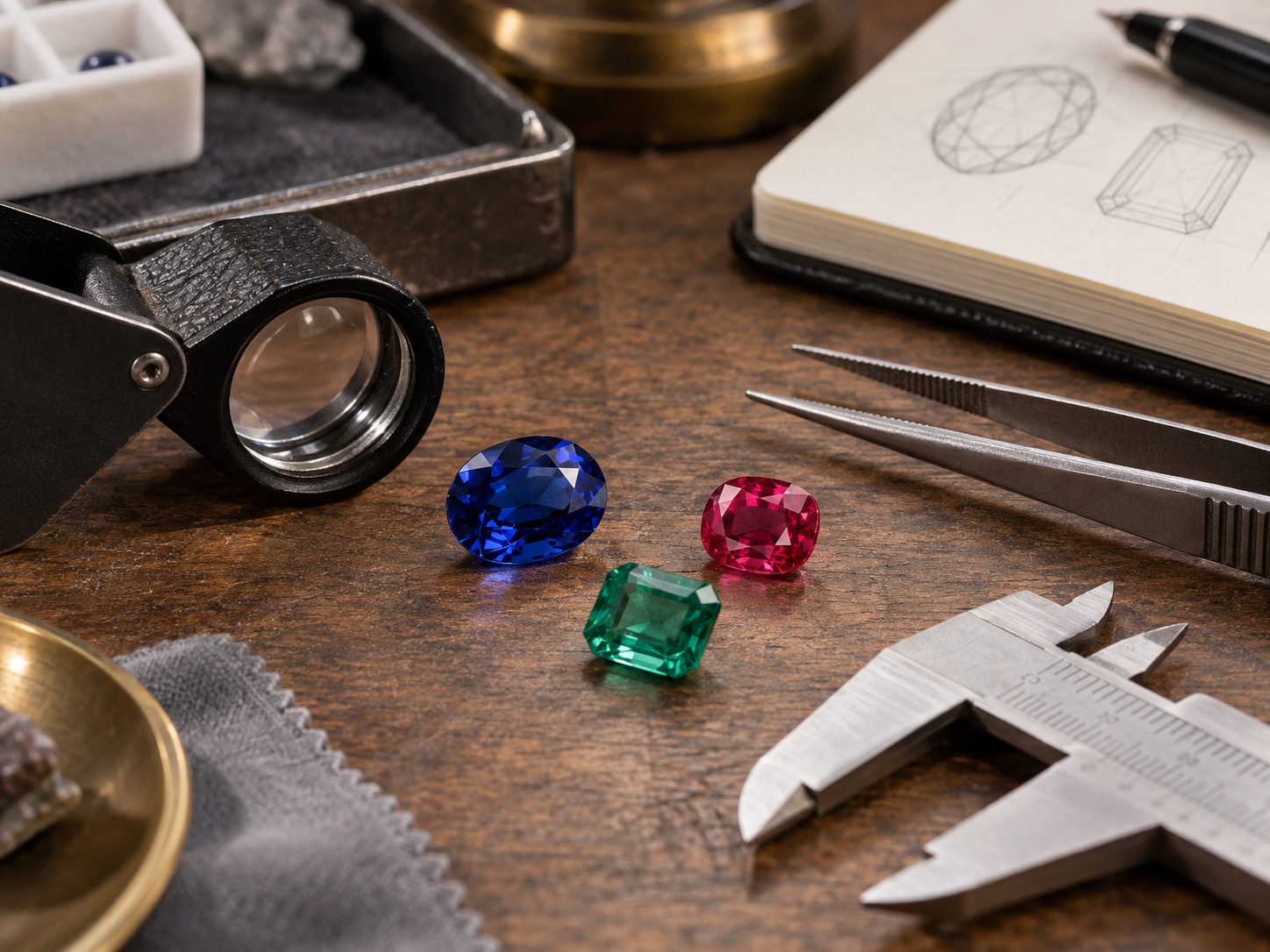
When we look at a finished piece of jewelry, it is easy to see the gemstone as the decorative part of the design. From a jeweler's perspective, though, that stone is also a material with its own physical characteristics, limitations, risks, and requirements.
Every gemstone brings information with it.
Its mineral composition matters. Its hardness matters. Its toughness matters. Cleavage, inclusions, heat sensitivity, surface treatments, and even the direction of internal crystal structures can influence the way a stone should be handled.
Two gemstones may look equally durable sitting next to each other in a tray and behave very differently once you begin cutting a seat, tightening a prong, pushing a bezel, soldering nearby, or polishing the finished piece.
That is one of the reasons I think jewelers benefit from learning at least some of the science behind the stones we use.
Not because we need to become gemologists before we can make jewelry, but because better understanding leads to better decisions.
The Stone Should Influence the Setting
One of the habits I encourage metalsmiths to develop is to stop thinking of stone setting as the final step in the design.
The stone should be part of the design conversation from the beginning. Before deciding on a setting, I want to know what the gemstone will tolerate.
Can I safely use a full bezel, or would the pressure required to close it create unnecessary risk?
Would prongs allow me to secure the stone while putting less stress on a vulnerable edge?
Does the stone have an unusually thin girdle?
Is the pavilion deep enough that the setting needs additional clearance underneath?
Are there inclusions close to the surface or corners that need to be protected?
Does the stone tolerate heat, or should every soldering operation be complete before it comes anywhere near the piece?
These are not separate questions from design. They are design questions. A beautiful setting that ignores the needs of the gemstone is not really a successful setting.
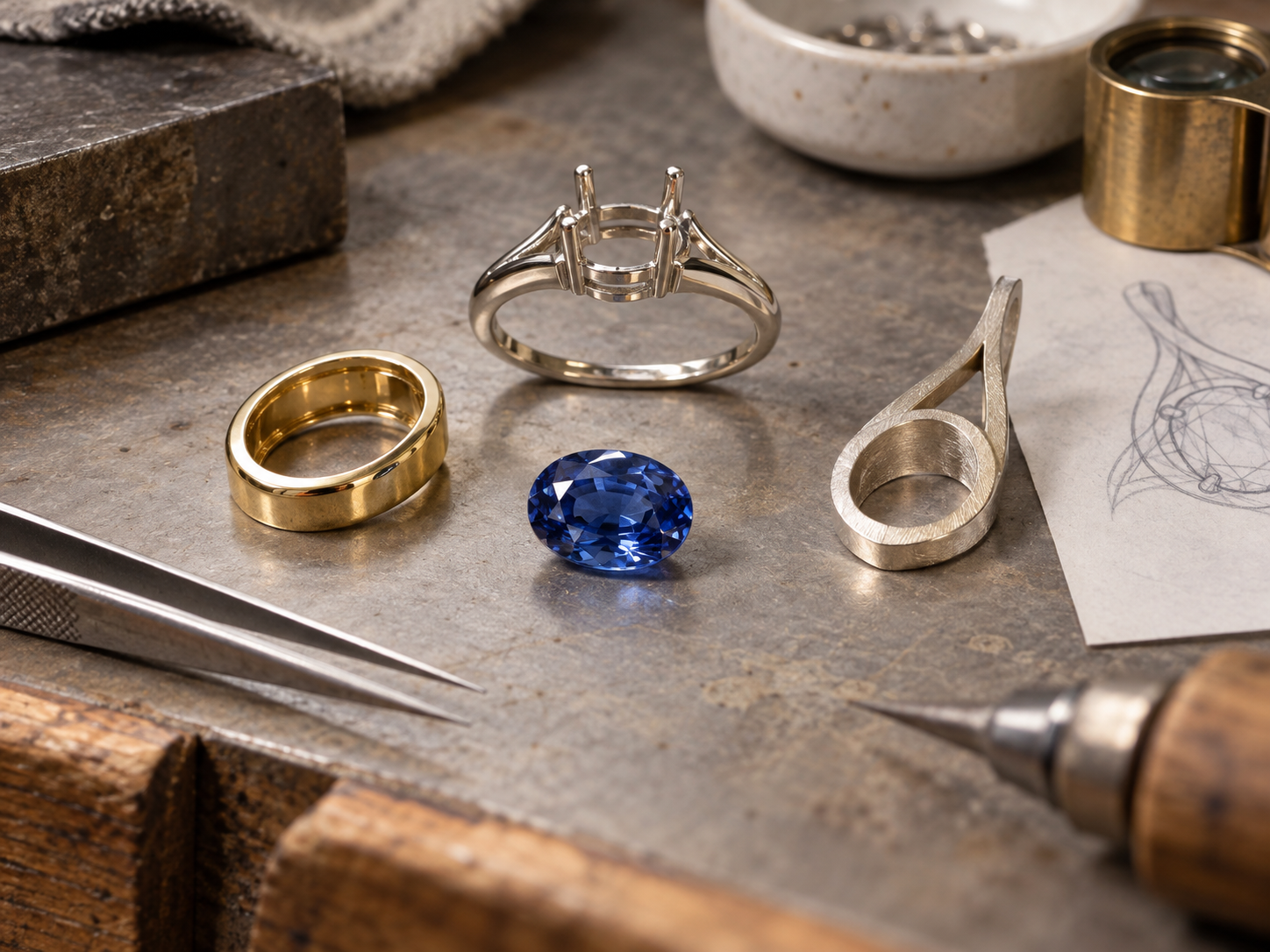
Color Has Its Own Design Requirements
Then there is the color itself.
Colored gemstones respond to metal in ways that are sometimes subtle and sometimes dramatic. A warm metal can intensify one color and mute another. A closed-back setting may deepen the appearance of a stone, while an open setting may allow more light to enter.
Even the width of a bezel can change how much color we perceive. This is where stone choice becomes part science and part visual judgment.
A jeweler has to consider not only, "Can I set this stone safely?" but also, "What does this stone need in order to look its best?"
Sometimes that means choosing a setting that exposes more of the stone. Sometimes it means protecting a fragile perimeter. Sometimes it means allowing an unusual inclusion or color zone to remain visible because that characteristic is part of what makes the stone interesting.
The best design is not always the one that makes the gemstone look most perfect. Sometimes it is the one that understands what makes that particular gemstone unique.
Why I Wanted to Create This Series
That is what I want to explore with this series.
Each Friday, we will look at a different colored gemstone from two directions.
First, we will look at the stone itself: what it is made of, how it forms, what gives it its color, and some of the characteristics that make it distinctive.
Then we will bring that information back to the jeweler's bench.
We will consider how the stone is commonly cut, where it may be vulnerable, which setting styles make sense, what fabrication decisions deserve extra attention, and how the character of the stone can influence the design around it.
Some gemstones are wonderfully forgiving. Others demand that we slow down and think carefully before we ever touch a tool to metal. Both can teach us something. Because the more we understand the materials we work with, the more deliberate our jewelry becomes.
And for me, that is one of the most interesting parts of metalsmithing: the point where science, craftsmanship, and design all meet at the bench.