

The Makers Who Shaped Me: Bruce Metcalf, The Jeweler Who Taught Me That Objects Can Think
There are artists whose work you admire because it's beautiful. Then there are artists who quietly change the way you think.
Bruce Metcalf is one of those artists for me.
The first time I encountered his work, I don't remember thinking, I want to make jewelry like that. Instead, I remember asking myself, How did he make me feel something with a brooch?
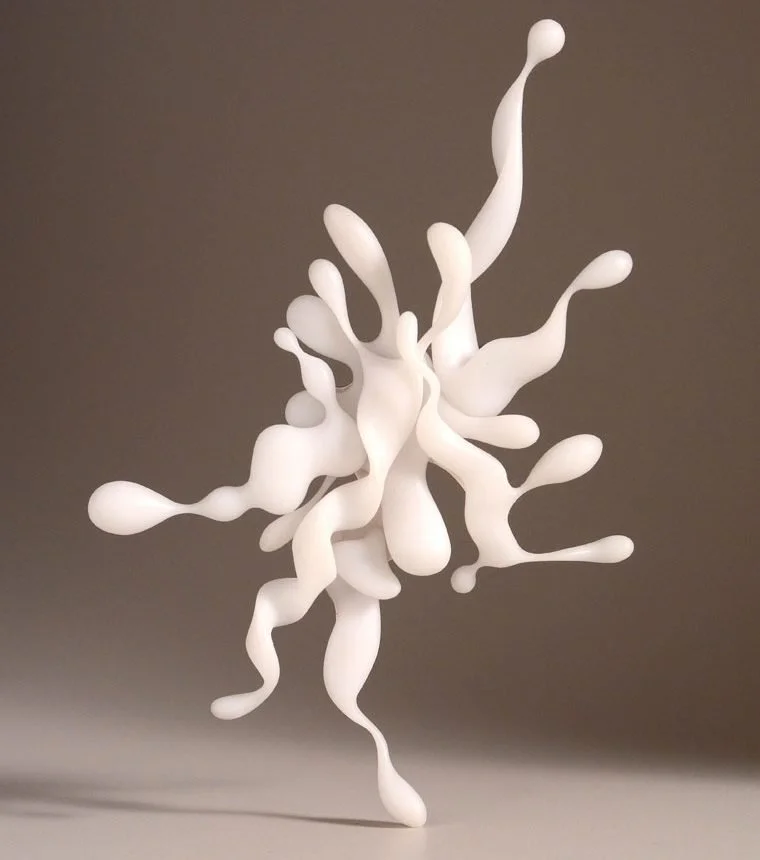
Nunc Stans Brooch - Bruce Metcalf (courtesy of Gallery Loupe) - click to see webpage
That's a very different question.
If you've never explored Bruce Metcalf's work, prepare yourself. This isn't jewelry created simply to sparkle or flatter the wearer. His work asks questions. It tells stories. Sometimes it makes you laugh. Sometimes it makes you uncomfortable. Almost always it asks you to slow down and look again.
More Than a Jeweler
One of the things that fascinates me most about Metcalf is that he refuses to separate making from thinking.
He's internationally recognized not only for his jewelry but also for his writing about contemporary craft. His essays have shaped how many artists understand studio jewelry, and his book Makers: A History of American Studio Craft, co-authored with Janet Koplos, has become foundational reading for many of us who love the history and philosophy of craft.
That combination is rare.
He doesn't simply build objects.
He builds ideas.
As someone who has spent years teaching metalsmithing, that resonates deeply with me because I've discovered that students rarely struggle with how to solder or how to set a stone.
They struggle with why.
Why choose this shape?
Why this material?
Why this construction?
Those are the same kinds of questions Bruce Metcalf has spent decades asking—not just in metal, but in writing.
Looking Beyond Precious Metals
Another thing I love about his work is his fearless use of materials.
Wood.
Paint.
Steel.
Silver.
Plastic.
Found objects.
Color.
Pattern.
Narrative.
Nothing seems off limits if it serves the story.
Instead of treating jewelry as precious because of the value of the material, Metcalf often makes it precious because of the value of the idea. Many of his pieces blur the line between jewelry and sculpture while still maintaining a relationship with the body.
That freedom is incredibly inspiring.
As metalsmiths, it's easy to become trapped by technique.
We spend years perfecting solder seams, bezels, engraving, surface finishes, and stone setting.
Those skills matter.
But Metcalf reminds us that technique is simply the language.
The conversation is something much bigger.
Looking Back at My Thesis
When I revisit photographs of my MFA thesis work today, I can see Bruce Metcalf's influence more clearly than I probably recognized while I was making it.
Not because my work looked like his.
The Hunt - Julessa Scofield 2015
It didn't.
Our visual languages are quite different.
But our questions were surprisingly similar.
My thesis explored symbolism, protection, vulnerability, history, and identity through fabricated metal forms that became almost wearable sculptures. Pieces like my Hunt series and later the armor I created for the SNAG runway were never just about craftsmanship. They were attempts to communicate ideas through fabricated metal. They asked viewers to think beyond adornment.
Looking back, I can see that Metcalf had already demonstrated that jewelry could carry philosophical weight without apologizing for it.
He gave permission to believe that jewelry could be intellectually ambitious.
Not because he said so directly—but because his work proved it.
The Importance of Writing
One of the greatest lessons I've learned from Bruce Metcalf isn't found in a brooch.
It's found in his essays.
Artists often underestimate the value of writing.
We assume our work should speak for itself.
Sometimes it can.
But writing forces us to understand our own intentions.
Metcalf has spent decades articulating why craft matters, why jewelry matters, and why making with our hands remains deeply human in an increasingly digital world. His essays on jewelry, the meaning of making, the hand in craft, and the philosophy of studio practice continue to influence conversations throughout the field.
That realization has influenced my own path more than I expected.
It's one of the reasons I'm writing these articles.
It's one of the reasons I'm creating Metalsmith Mentor.
Teaching isn't just demonstrating a technique.
It's helping someone learn to think like a metalsmith.
What I Hope Students Learn
When students come into my studio—or someday work through the growing Metalsmith Mentor library—I certainly want them to learn how to fabricate a clean bezel.
I want them to understand solder flow.
I want them to cut accurate seats.
But even more than that, I want them to develop curiosity.
To ask better questions.
To make intentional decisions.
To realize that every file mark, every texture, every design choice communicates something.
Bruce Metcalf helped shape that philosophy long before I could put it into words.
His work reminds me that jewelry isn't merely decoration.
It can be memory.
It can be commentary.
It can be humor.
It can be history.
It can even become a conversation between maker and wearer that continues for generations.
For me, that's what great jewelry has always been about.
And every time I revisit Bruce Metcalf's work, I'm reminded that our greatest tools aren't our saws, torches, or gravers.
They're our curiosity and our willingness to ask better questions.
Continue Your Journey at My Bench
The makers in this series have shaped the way I think, design, and teach.
Inside My Bench, I share the practical side of that journey through free bench references, printable worksheets, calculators, studio notes, and foundational resources to help you build confidence at your own bench.
Next week’s featured artist - Charles Lewton-Brain.