The Glittering Tokens of Tudor Love: Jewelry Henry VIII Gave Anne Boleyn
As a student deeply immersed in the history of jewelry, I find the pieces Henry VIII bestowed upon Anne Boleyn during their courtship (roughly 1526–1533) endlessly compelling. These were not mere ornaments but layered artifacts of desire, ambition, and Tudor court politics—objects that carried symbolic weight far beyond their material value. Henry’s gifts illuminate both the intensity of his pursuit and the precariousness of Anne’s position, offering a fascinating lens through which to examine how jewelry functioned as currency of power and personal expression in the early modern period.
One of the earliest documented gifts stands out for its remarkable ingenuity and intimacy: a miniature gold pistol-shaped pendant, engraved in relief with scrolling foliage and featuring a serpent motif coiled around the butt. Far from purely decorative, it concealed practical implements—a toothpick, an earpick, and a tiny spoon—reflecting the Tudor emphasis on personal refinement and hygiene, qualities Henry himself prized. Tradition holds that Anne presented this piece to her Tower jailer on the eve of her execution in 1536, wryly observing that the serpent had “proved ever unto me.” While the anecdote’s veracity remains debated, the pendant’s survival (now associated with collections like the V&A) underscores how even utilitarian objects could become potent emotional tokens.
As the king’s affection deepened, the scale and symbolism of his gifts intensified. Letters reference a gold bracelet enclosing a portrait miniature of Henry—a wearable declaration of devotion. Records also note emerald-set rings, diamond girdles, and strands of fine pearls, many incorporating entwined “H” and “A” initials that publicly asserted their bond well before their secret marriage in January 1533. In a striking assertion of royal prerogative, Henry compelled Catherine of Aragon to surrender her consort jewels in 1532, including notable rubies, so that Anne might wear them during the state visit to Calais. This transfer was both a personal slight to Catherine and a calculated elevation of Anne toward queenship.
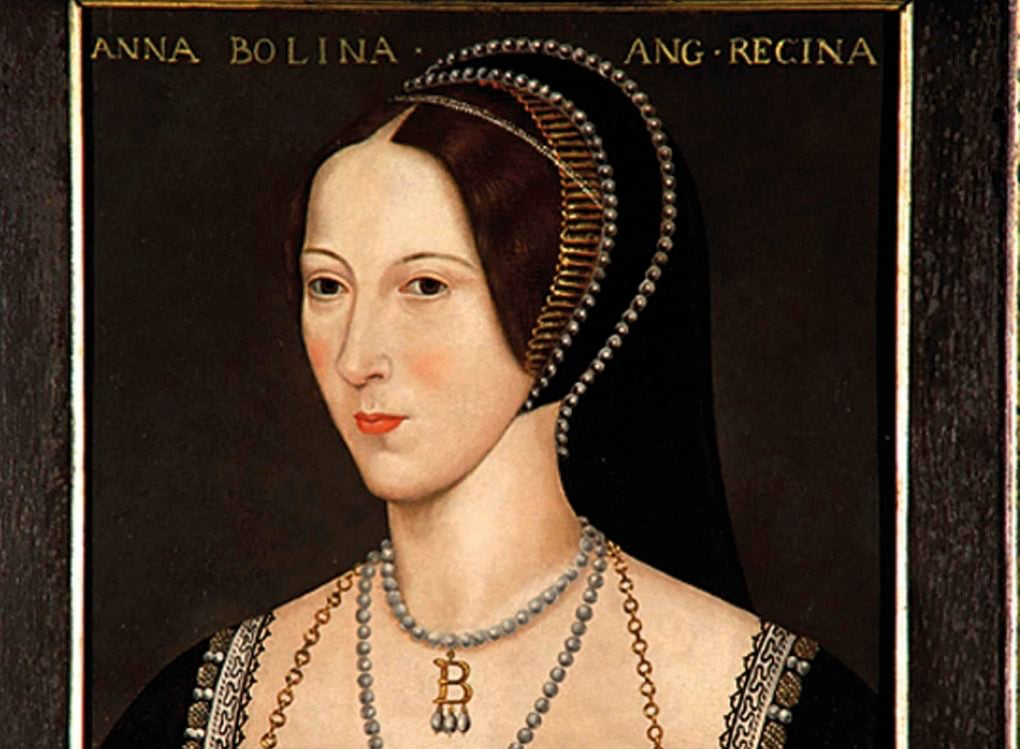
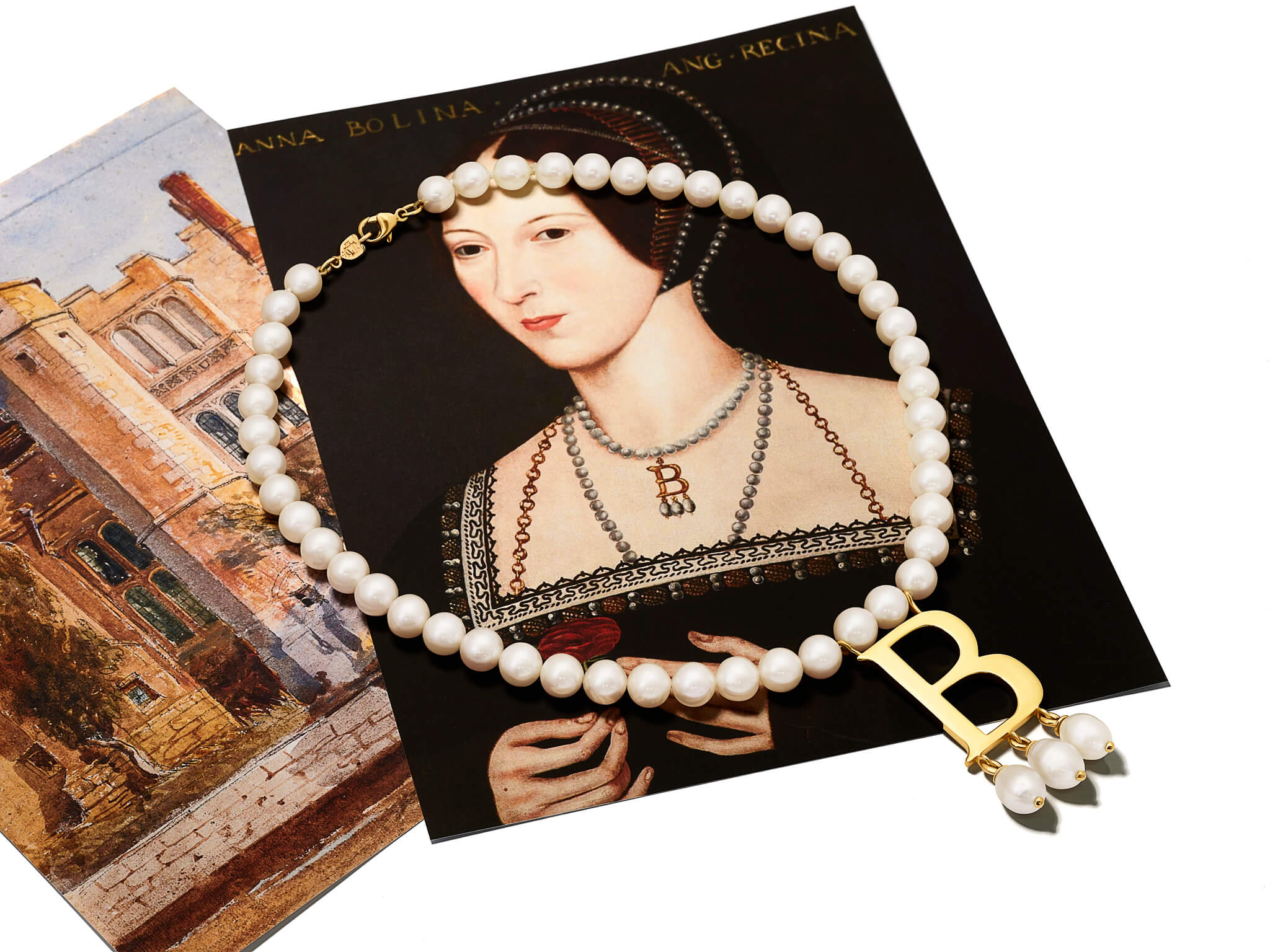
Anne’s own aesthetic preferences are evident in the gifts she received and favored. She gravitated toward bold, individualized pieces rather than strictly devotional ones. The most iconic is the so-called “B” necklace: a prominent gold letter “B” pendant suspended from a double strand of pearls, often depicted with three teardrop pearls dangling beneath. While scholars generally regard this as Anne’s personal possession—asserting her Boleyn identity rather than a direct royal gift—it became emblematic of her style and self-assurance in an era when monograms carried profound significance.Pcqx3“LARGE”
By the time of Anne’s coronation, these jewels had helped craft her image as the embodiment of Tudor queenship. Yet the splendor proved transient. Following her arrest for treason in May 1536, her entire collection—gowns, furs, and gems alike—was inventoried and confiscated. Ambassadorial correspondence indicates that a substantial portion passed to Princess Mary as a gesture of reconciliation, while the remainder entered royal coffers or was redistributed. The ultimate fate of the “B” necklace and other monogrammed pieces remains one of Tudor jewelry’s most intriguing mysteries; some pearls may have been repurposed for later royal adornments, perhaps even influencing pieces worn by her daughter Elizabeth I.
For the jewelry historian, these lost or transformed artifacts represent far more than historical bling. They embody the intersection of romance and realpolitik, where a single pendant or strand of pearls could signal shifting alliances, personal agency, and the fragility of favor. Anne’s jewels remind us that in the Tudor world, adornment was never neutral—it was a deliberate instrument of identity, influence, and legacy. Even centuries later, the study of these pieces continues to reveal the nuanced ways material culture shaped—and was shaped by—one of history’s most dramatic courtships.